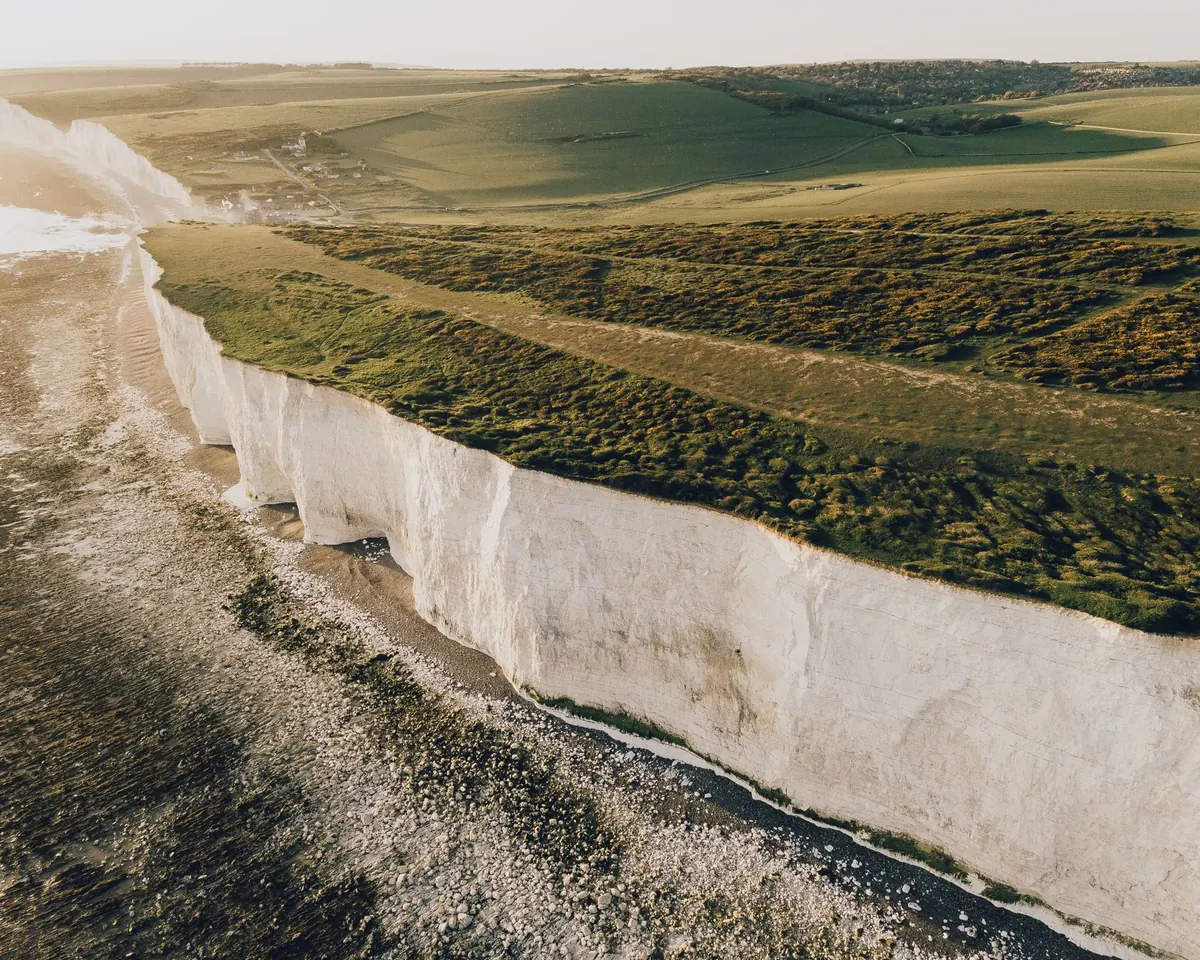
A winter coast is quieter, sharper and often better walking than the summer version. The crowds have gone, the light is low and long, and you can hear surf from half a mile inland. It is also the season that punishes a late start and a badly packed bag. Daylight is short, the wind bites harder than the thermometer suggests, and paths that were dust in August are ankle-deep in mud by January. None of that is a reason to stay indoors. It is a reason to plan a little more carefully than you would in June.
On a December day you might have barely six hours of usable light, and the last hour is a soft grey that hides trip hazards and makes cliff edges hard to read. Treat sunset as the end of the walk, not the point at which you start heading back.
Two things catch people out. The first is the low sun: on a west-facing coast it drops behind the headland well before the official sunset time, so the beach goes into shade early. The second is the wind. A walk that takes three hours outbound into a headwind takes longer coming home, especially once your legs are tired.
A simple method: find out when sunset is, subtract an hour, and make that your back-at-the-car time. If that gives you four hours of walking, plan a four-hour route. Coastal paths in winter are slower than the same paths in summer, so treat summer timings as an optimistic guess rather than a plan.
Pick a time, write it down, and stick to it even if the view is superb. Turning around twenty minutes early costs you nothing. Being on a clifftop path in the dark with no easy exit costs a great deal more.
Tide tables are free and easy to find: harbour noticeboards, a chandlery, or the tourist information office. Read the height as well as the time. A big spring high water swallows beaches that stay perfectly dry on a neap tide.
High water does not arrive everywhere at once. A bay a couple of miles along the coast can be noticeably later, and estuaries are later still the further up you go. If you are relying on a beach being passable at a certain hour, check the table for the nearest port and give yourself a generous margin.
The rule of twelfths is a useful rough guide. Over the six hours from low water to high, the tide rises about one-twelfth of its range in the first hour, two-twelfths in the second, three-twelfths in the third, then three, two and one. The water comes in fastest around the middle of the cycle, which is exactly when people are furthest out.
Wind is the biggest single factor in how a winter coastal walk feels. Ten degrees with a stiff onshore breeze and spray in the air is a different experience from ten degrees in a sheltered wood, and it matters most when you stop. Sweat on the climb, then stand still at a viewpoint for ten minutes, and the cold arrives quickly.
Layers do the work. A base layer that moves sweat away, a fleece or light insulated mid layer, and a windproof, waterproof shell that goes on before you get cold rather than after. Vent on the uphill sections, zip up on the exposed headland. Over-trousers and gaiters are worth carrying even when the forecast looks dry.
Hands and head lose heat fast. Take gloves, and take a spare dry pair in a plastic bag. When you stop for lunch, get out of the wind and put a dry layer on before you eat.
Clay and chalk clifftop paths turn greasy. Gateways and stiles collect the worst of it, and worn grass on steep descents becomes a slide. Shorten your stride, slow the descent, and consider a single walking pole for balance.
Green algae on a slipway, seaweed on rock and wet timber steps are all effectively ice. Test each step rather than committing your full weight, and use your hands on rough rock if it helps.
Wet sand near the waterline is usually firm; dry sand above it is soft and tiring. Streams cutting across a beach leave saturated patches, so cross where the sand looks darker and firmer.
Before you leave, tell someone the route, where the car is parked, and when you expect to be back. Send a screenshot of the map with your intended path marked. If you walk alone, consider sharing your live location.
Mobile signal on the coast is patchy. It disappears in bays, under cliffs and in wooded valleys, so do not treat the phone as your safety net. Cold drains batteries quickly, which is why the torch, whistle and foil blanket above matter.
If the light is going and you are not where you expected, turn back rather than pushing on to a viewpoint. If the tide cuts you off, get to high ground and stay there, keep warm, and call 999 and ask for the Coastguard. If a medical condition could be affected by cold or exertion, speak to your GP before planning a long winter route.
Most winter coastal walks go wrong in the planning, not on the path. Check the tide and the sunset time, work out your turnaround, and pack the bag so the torch and spare gloves sit at the top rather than buried. Fill a flask, charge your phone, and leave your route details with someone at home.
Do that, and the short days stop being a limitation and become part of the appeal: empty beaches, long shadows, and a flask of tea at the end of a clifftop path with nobody else on it.
Photo: jplenio / Pixabay