Coastal walking has a reputation for being simple. The sea is on one side, the land on the other, and a path runs between them. That reputation is where the trouble starts. A clifftop route is shaped by tide, weather, erosion and a shoreline that folds in and out of every headland, and it punishes anyone who plans it like a stroll in the park. None of the mistakes below are exotic. Most coastal walkers have made two or three of them, often on the same day, usually in the last hour.
On the map, a stretch of coast looks like 8 km. On foot, it turns out to be 12. Every headland pushes the path inland and out again, and every inlet adds a detour round the back of it. Estuaries are worse: a river mouth that looks narrow enough to cross can send you two or three kilometres upstream to the nearest bridge.
So measure along the path, not across the bay. Guidebooks, waymarkers and route leaflets normally give the true figure. Then look at how the path behaves on the map. The tighter the contours and the more the line wriggles, the slower you will be.
Most coastal walks are not tidal, which is precisely why the tidal ones catch people out. A beach that gave you a wide, firm highway on the way out can be a narrow strip against the cliff an hour later, with the water already behind you. Tides often move faster than walkers expect, and on wide bays the sea can arrive sideways rather than straight at you.
Check a tide table for the place you are actually walking, not for a town thirty miles along the coast, because times and heights vary more than people assume. Then answer two questions before you commit to the sand: at what point does the route become impassable, and where does the cliff path climb off the beach if it does?
Coastal mud is its own thing. Clay soil, cattle-trodden gateways and shaded combes go from firm to treacherous after a night of rain, and it is usually found on ground that slopes towards something you would rather not fall off. Smooth-soled trainers are hopeless here.
Watch for:
Boots with proper lugs, and a walking pole for the steeper sections, will do more for your day than any other piece of kit.
Contours tell the truth. Coastal paths rarely settle: they drop into every combe and climb over every headland, forty metres here, sixty there, all afternoon. A route described as twelve kilometres can easily take four hours, and the last headland always takes longer than the first.
Be honest with your timings. Start with your normal walking pace, add generously for the climbing, then add a little more if the ground is wet or the wind is in your face. On a long-distance path, work out where the day's ascent actually sits rather than assuming it is spread evenly.
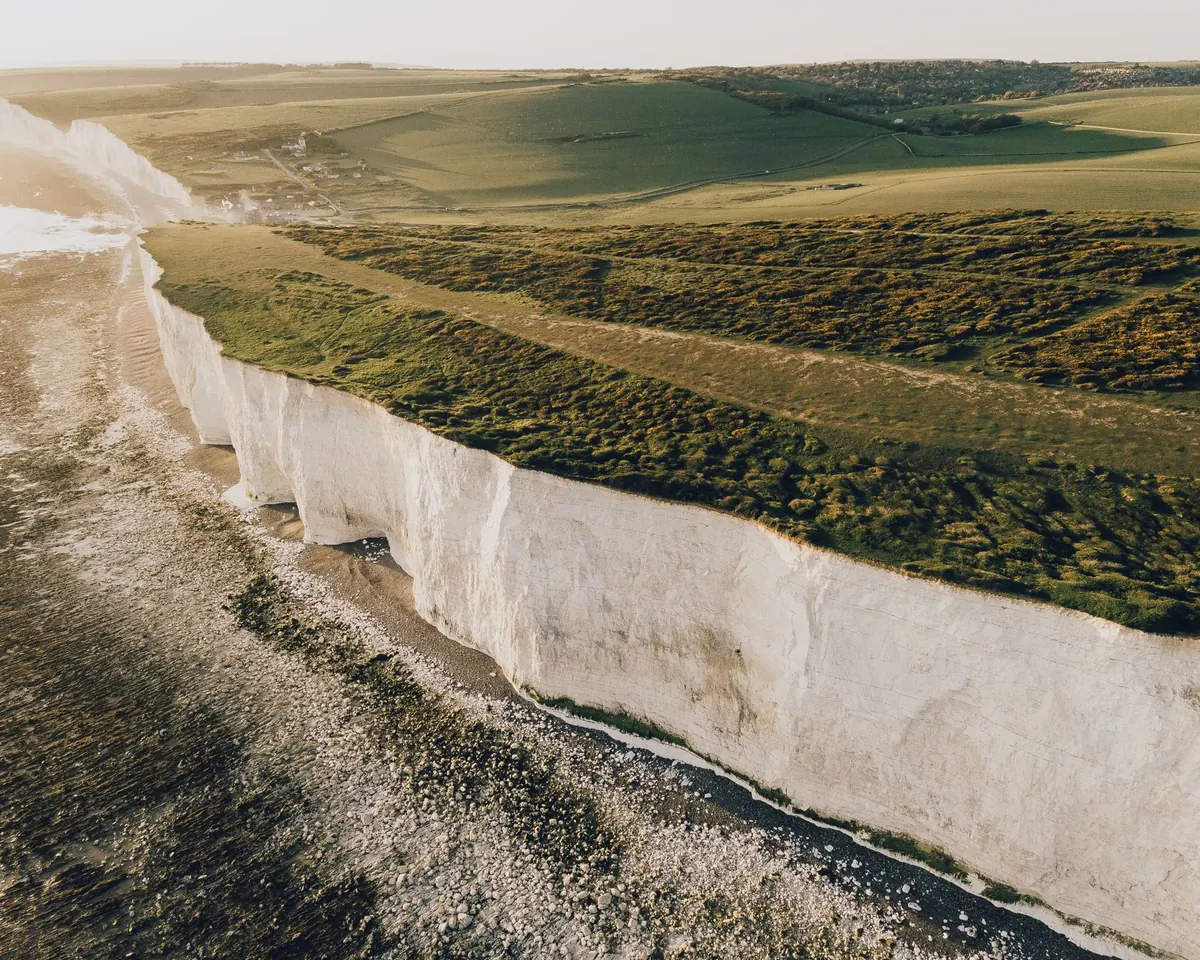
Cliff edges are not fixed points. Erosion happens quietly and then suddenly, and the strip of grass that looks solid is often overhanging soil held together by roots. Cracks, slumped ground and bare patches near the edge are warnings, not scenery.
Keep well back. Sit down to eat, take your photographs away from the drop, and treat path closures as absolute. If a section has been rerouted inland, the old line may still be visible and tempting; ignore it. The same goes for unofficial shortcuts down to a beach, which tend to end in loose ground and a call to the coastguard.
If you catch yourself thinking "it's only a few steps", take the long way round instead.
Signal on the coast is patchy in exactly the places you would want it: deep coves, wooded valleys, the shadow of a headland. Cold weather drains a battery quickly, and a waterproof pocket is not the same as a waterproof case.
Download the map for the area before you leave, carry a paper map or printed route as well, and switch the phone to aeroplane mode between checks. Tell somebody your route and your expected return time, including the alternative you would use if the tide or the weather turned. If something does go wrong, call 999 and ask for the coastguard.